
Sir William Walton
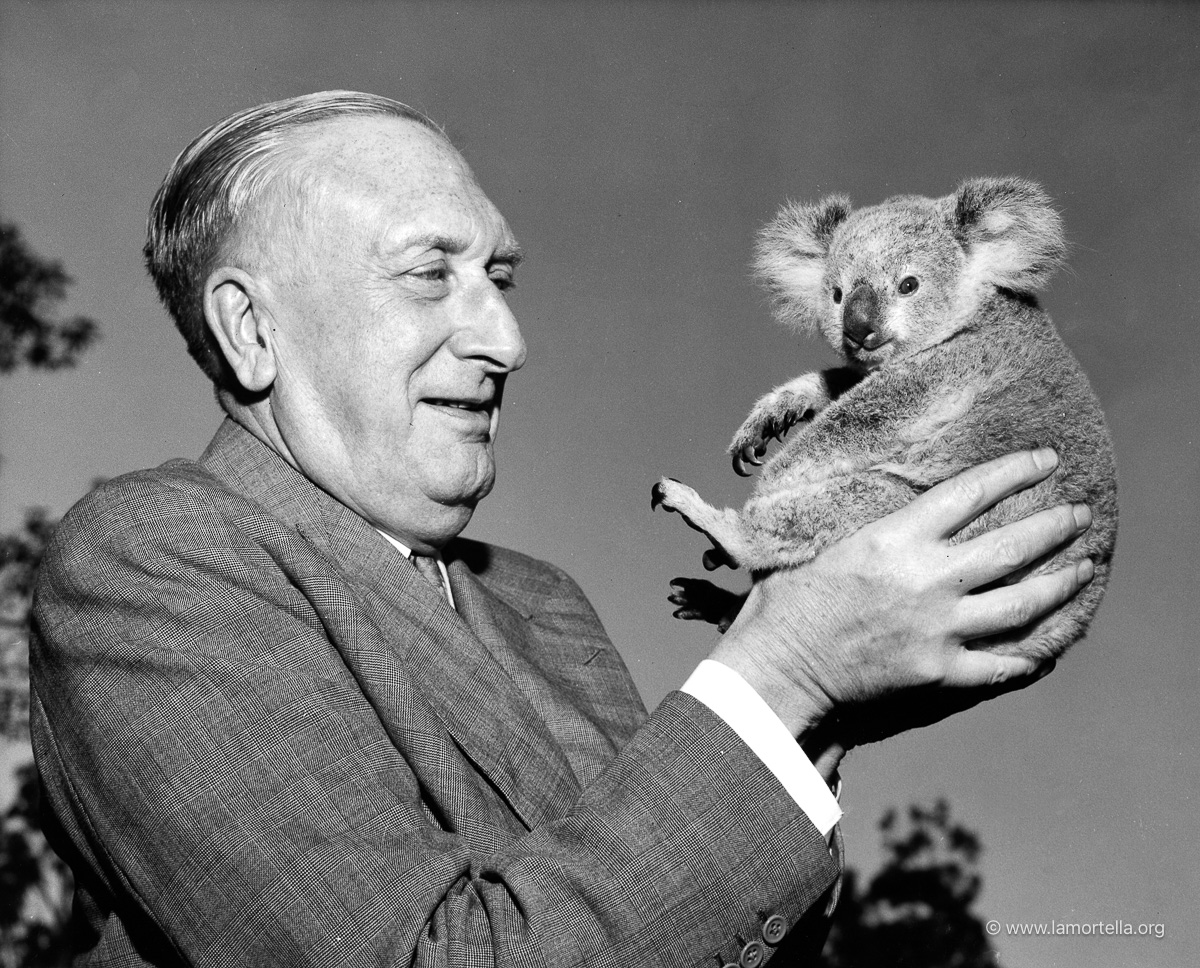
Sir William Turner Walton was born in Oldham in 1902 to a family in financial difficulty, and showed great musical talent from an early age. At the age of ten, he was admitted as a choirboy to Christ Church Cathedral School in Oxford, where he received musical training and began composing his first works, already demonstrating a distinctive style.
During his years at Oxford, he came into contact with important musical and cultural figures, but especially with the Sitwell brothers, who introduced him to an avant-garde artistic scene in London after he left university without graduating. With them, he enjoyed a period of intense collaboration and artistic growth, which led to the creation of innovative works such as Façade, a work that combined spoken poetry and instrumental music with ironic and parodistic elements.
In the 1920s, Walton established himself internationally with chamber and orchestral compositions such as the String Quartet Op. 1, Portsmouth Point, and the Sinfonia Concertante. During this period, he came into contact with important composers such as Berg, Schoenberg, and Gershwin, who influenced his style in different ways, though without distorting it.
In the following years, he consolidated his fame with works such as the Viola Concerto and, above all, Belshazzar's Feast, which established him as a major British composer. At the same time, he developed important personal relationships, including one with Imma von Doernberg, who left a profound impression on him and influenced his First Symphony. After the end of this relationship, he found a new balance thanks to Alice Wimborne, with whom he resumed his creative activity and completed the First Symphony, which was received with great acclaim.
In the 1930s and 1940s, Walton became a central figure in English music, also composing music for films and official commissions such as the Crown Imperial March. During the Second World War, he worked primarily for film and radio, while maintaining a strong composing activity. During this period, his rivalry with Benjamin Britten also emerged, which pushed him to write important works such as the Second String Quartet and, above all, the opera Troilus and Cressida.
After Alice Wimborne's death in 1948, Walton went through a difficult period, but recovered thanks to his marriage to Susana Gil Passo, whom he met during a trip to Argentina.
In these gardens, developed by Lady Walton with the help of landscape architect Russell Page, Walton continued to compose important works such as the Violin Concerto, the Cello Concerto, and the Partita for Orchestra.
In the 1950s and 1960s, he received numerous official awards and continued to produce significant works, including his Second Symphony, choral works, and new film scores. In his later years, he continued to devote himself to composition, creating short but refined works such as Façade 2 and several works for solo instruments.
William Walton died on March 8, 1983, at the age of 80, in his home at La Mortella in Ischia, leaving a musical legacy that places him among the most important British composers of the twentieth century, capable of combining tradition, modernity, and a strong expressive personality. His ashes rest in William's Rock in the La Mortella Gardens.